
Subjects
How to Help Your Teen Bounce Back After Mock Exam Results
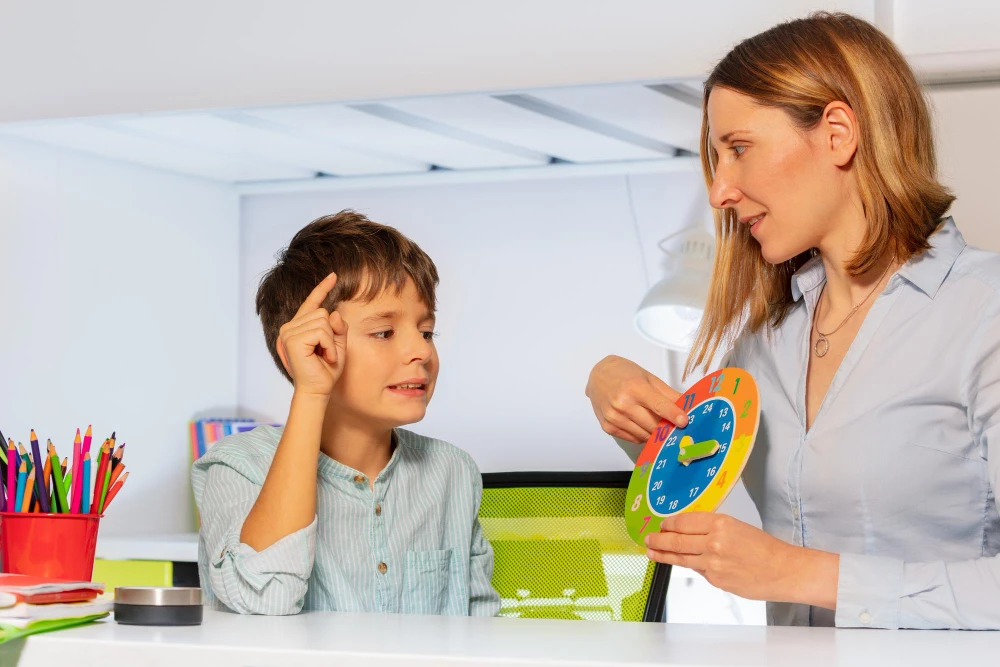
Mock exam results can be a difficult moment for teenagers. After weeks of revision, lessons and preparation, seeing grades that are lower than expected can leave students feeling disappointed, anxious or even convinced that they are not capable of achieving the results they want.
However, mock exams are not the final destination. They are an opportunity to identify what is working, what needs to change and where additional support could make the biggest difference.
For parents, the most important thing is to help your teen move from disappointment to action. With the right approach, bouncing back from mock exams can become a valuable part of their GCSE journey rather than a setback.
Start With the Right Conversation
When your teen receives disappointing mock results, your first response can have a significant impact on how they feel about themselves and their ability to improve.
It can be tempting to immediately ask questions such as, “Why didn't you revise more?” or “What happened?” Although these questions may come from a place of concern, they can make a student feel judged rather than supported.
Instead, give them an opportunity to talk about how they feel.
You could ask:
- How do you feel about your results?
- Were there any grades that surprised you?
- Which subjects do you feel most confident about?
- Was there anything that made the exams particularly difficult?
- Is there anything you would like help with?
The aim is not to dismiss disappointing grades. Instead, help your teen understand that a mock result is information, not a definition of their ability.
A student who receives a grade lower than expected has not failed at GCSEs. They have discovered that their current approach may need to change.
Look Beyond the Grades
A mock exam grade only tells part of the story. Parents should encourage their teenagers to look carefully at the individual papers and teacher feedback.
For example, a student might receive a Grade 4 in GCSE English Language but have performed strongly on reading questions while losing marks on extended writing. Another student might know the content in GCSE History but struggle to explain their ideas in enough detail.
These differences matter.
Rather than simply saying, “I need to improve English,” encourage your teen to identify exactly what needs improving.
Their review might look something like this:
Subject: GCSE English Language
Current grade: 4
Target grade: 6
Main weakness: Extended writing
Specific issue: Paragraphs lack development and examples
Action: Complete one timed writing task each week and review it using the mark scheme
This turns a vague concern into a manageable improvement target.
Identify the Biggest Gaps
For students who are struggling with a particular subject, targeted support can make revision more manageable. For example, families looking for a science primary tutor online can access subject-specific guidance that focuses on building understanding before moving on to more challenging topics.
Teenagers can easily become overwhelmed when they look at an entire GCSE specification and realise how much content they are expected to know.
Instead, help them prioritise.
Ask them to divide topics into three categories:
Green – Confident:
Topics they understand and can answer questions on independently.
Amber – Developing:
Topics they partly understand but sometimes make mistakes with.
Red – Priority:
Topics they find difficult or consistently lose marks on.
The red and amber areas should form the foundation of their new revision plan.
This approach is much more effective than spending hours repeatedly revising material they already know.
Create a Structured Improvement Plan
Once weaknesses have been identified, some students may also benefit from additional one-to-one guidance. An online primary tutor can help younger learners build a stronger foundation by focusing on specific topics and creating a structured approach to improvement.
A good improvement plan should be specific. “Revise Maths” is unlikely to be particularly useful because it does not tell the student what to do.
Instead, try targets such as:
- Complete ten questions on simultaneous equations.
- Revise five key quotations from Macbeth.
- Create flashcards for the causes of the First World War.
- Complete one GCSE Geography case-study question.
- Practise one 16-mark exam question under timed conditions.
Breaking revision into smaller tasks makes it feel more achievable.
It can also help to create a weekly timetable that balances academic work with downtime. Teenagers need breaks, sleep and opportunities to relax. A revision schedule that leaves no room for these things is unlikely to be sustainable.
Address Exam Stress
Mock results can sometimes increase exam stress, particularly if students begin to worry about their upcoming GCSEs.
Parents should look out for signs that stress is becoming overwhelming. A teenager might become unusually irritable, withdraw from activities they normally enjoy, struggle to sleep or constantly worry about their grades.
The solution is not necessarily to increase the amount of revision.
Sometimes, students need to improve the quality of their revision rather than simply spending more hours studying.
Encourage regular breaks, good sleep routines, physical activity and time away from screens and schoolwork. Even short breaks can help students return to revision with greater concentration.
Most importantly, avoid creating an environment where every conversation becomes focused on grades.
Your teen needs to know that their results matter, but that their worth is not determined by them.
Use Past Papers More Strategically
Some subjects may require extra practice and individual support to strengthen specific skills. Students who need additional help with mathematics can work with primary maths online tutors to improve their understanding, practise problem-solving and build confidence gradually.
After completing a practice paper, students should spend time analysing their mistakes.
Encourage your teen to ask:
- What type of question did I lose marks on?
- Did I misunderstand the question?
- Did I forget important knowledge?
- Did I run out of time?
- Did I know the answer but fail to explain it clearly?
- What would a higher-mark answer have included?
This creates a feedback loop: practise, identify the problem, improve the skill and practise again.
It also helps students become more familiar with the expectations of their exam board.
Consider Additional Support
For parents considering a private online tutor, personalised tuition can provide focused support based on the student's individual strengths, weaknesses and learning goals. Online learning also offers flexibility around school, extracurricular activities and existing revision commitments.
As students move into more advanced subjects, they may need additional guidance in specific areas of the curriculum. Support with Key Stage Three science can help students strengthen their knowledge before progressing to GCSE-level topics.
GCSE tutors can provide targeted support that focuses specifically on the areas where a student is losing marks. This can be particularly useful when a teenager knows they are struggling but does not know how to improve independently.
A tutor can help identify knowledge gaps, explain difficult concepts in a different way and provide regular opportunities to practise exam questions.
For some students, working with GCSE tutors also provides an important confidence boost. A student who has repeatedly struggled with a particular topic may begin to believe they are simply “bad” at the subject. Seeing themselves successfully complete increasingly difficult questions can help rebuild their confidence.
For parents considering an online tutor UK students can access from home, online tuition can also provide flexibility around school, extracurricular activities and existing revision commitments.
Focus on Progress, Not Perfection
After disappointing mock results, students can become focused on the gap between their current grade and their target grade.
For example, a student receiving a Grade 5 may look at a target Grade 8 and think, “I'm never going to get there.”
Parents can help by shifting the focus towards smaller improvements.
Instead of asking, “How are you going to get a Grade 8?” ask:
“What could you do this week to move closer to your target?”
Perhaps the student can improve one question type. Then another. Over time, these small improvements can have a significant impact.
This approach also helps develop resilience. Teenagers learn that improvement is rarely immediate and that struggling with something does not mean they are incapable of mastering it.
Help Them Learn From the Mock
One of the biggest mistakes students can make is treating mock exams as something that is finished and forgotten.
The real value of a mock comes from what happens afterwards.
Encourage your teen to keep their mock papers, feedback and revision notes together. They can then return to these materials regularly and track their progress.
For example:
Mock result: Grade 5
Weakness identified: Algebraic equations
Action: Two focused revision sessions per week
Follow-up: Complete a topic test
Result: 75%
Next step: Move onto exam-style questions
This creates visible evidence of improvement.
Seeing that their hard work is making a difference can be incredibly motivating.
Rebuild Confidence Through Small Wins
Confidence often returns after students experience success.
If your teen has lost confidence following mock exams, avoid immediately giving them the most difficult questions available. Start with something they can reasonably achieve, then gradually increase the challenge.
This might mean completing a short quiz, successfully answering a familiar question type or improving one paragraph from a previous piece of work.
Celebrate these improvements.
A student who thinks, “I can't do this,” needs opportunities to experience, “Actually, I can do this now.”
That shift in mindset can make a considerable difference to their motivation.
Final Thoughts
Disappointing mock exam results can feel significant, but they do not predict the final outcome of a student's GCSEs or A-Levels.
The months following mock exams provide valuable time to identify weaknesses, change revision strategies and build confidence before the real examinations.
For parents, the key is to turn disappointment into a plan.
Where additional support is needed, working with online GCSE tutors can provide targeted guidance based on the areas where a student needs the most improvement. With the right support, effective revision strategies and a structured approach, students still have plenty of time to make meaningful progress before their final examinations.
Most importantly, remind your teen that one set of mock results is simply a snapshot of where they are now.
With the right support, effective revision tips and a structured approach to improvement, there is still plenty of time to make progress.
The question after mock exams should not be, “What went wrong?”
It should be:
“What have we learned, and what are we going to do next?”